Incense on the new moon, full moon and death anniversaries: the yearly rhythm of a Vietnamese altar
Short answer: Vietnamese families usually light incense at the ancestor altar on the first and fifteenth days of each lunar month, on the death anniversary of each ancestor, and on big occasions such as Tết, the first full moon of the year and the full moon of the seventh lunar month. Monthly offerings are simple: fresh water, flowers, fruit and incense. Death anniversaries, called đám giỗ or ngày giỗ, are family gatherings with a full meal. The part that deserves the most care is fire and smoke: modest amounts of incense, open windows, no unattended candles, and votive paper burned in a metal container outdoors.
The first and the fifteenth: a monthly rhythm
The Vietnamese lunar calendar follows the moon, so the first of the month (mùng một) falls at the new moon and the fifteenth (ngày rằm) at the full moon. These two days are the most familiar rhythm of household worship. Some families light incense the evening before; others do it on the morning itself.
A typical monthly offering involves:
- Wiping the altar, changing the water in the cups and replacing the flowers.
- Setting out a plate of fruit, sometimes with sweets, sticky rice or sweet soup.
- Lighting incense, usually one or three sticks, and saying a short prayer.
- In many households, eating vegetarian or lightly on these days.
Nothing about the monthly offering is fixed. Many older Vietnamese value a small, regular offering over a large, irregular one. You will also notice that markets are busier with flower sellers the day before.
Death anniversaries: the most important day for each ancestor
A giỗ marks the lunar date of someone's death and is remembered every year. For Vietnamese families it often matters more than the person's birthday ever did. The first anniversary and the one that formally ends mourning, usually around two years after the death depending on the region, are the major milestones; after that comes the regular yearly anniversary.
On the day, a full savoury meal is offered at the altar, then shared by family and guests once the offering is "taken down". The eldest son, or whichever household keeps the main altar, normally hosts, and other branches of the family contribute work or money as they have agreed.
What to do as a guest at a giỗ
- Bring a small offering: a packet of incense, flowers, a box of cakes or a bottle of wine. Place it on the altar or hand it to the host to arrange.
- Ask if you may light a stick of incense, bow before the altar, then step back.
- Dress neatly in muted colours. A giỗ is not a funeral, so black is unnecessary, but avoid very bright or revealing clothes.
- Sit down to eat when invited, and let the eldest person start first.
Foreign sons- and daughters-in-law who remember the anniversaries of their partner's grandparents and turn up, even just to light one stick of incense, are usually warmly appreciated. It is one of the clearest ways to show you have joined the family.
Taking down the offering
After lighting incense, the family waits for it to burn partway, often until it is nearly finished, before clearing the offering. Some pour another cup of wine and bow once more first. The food that comes down is shared by everyone; this is called thụ lộc, receiving the ancestors' blessing.
Fruit left on an altar in a hot, humid house spoils quickly, so take it down the same day or the next, before it attracts flies and ants.
Incense, candles and indoor smoke
On a giỗ, many people light incense one after another and the smoke gets thick. Sensible habits:
- Open windows and doors; do not run the air conditioner with the altar room sealed.
- One stick per person is respectful enough; nobody needs to light a whole bundle.
- Keep the incense bowl and candles well away from curtains, paper flowers and photo frames.
- Keep small children away while incense is burning; falling embers can burn skin.
- Before bed or before leaving the house, check candles are out and incense has burned down.
Anyone with asthma or a lung condition should ask a doctor about smoke exposure and may prefer to sit in another room during the busiest part.
Votive paper: where and how to burn it
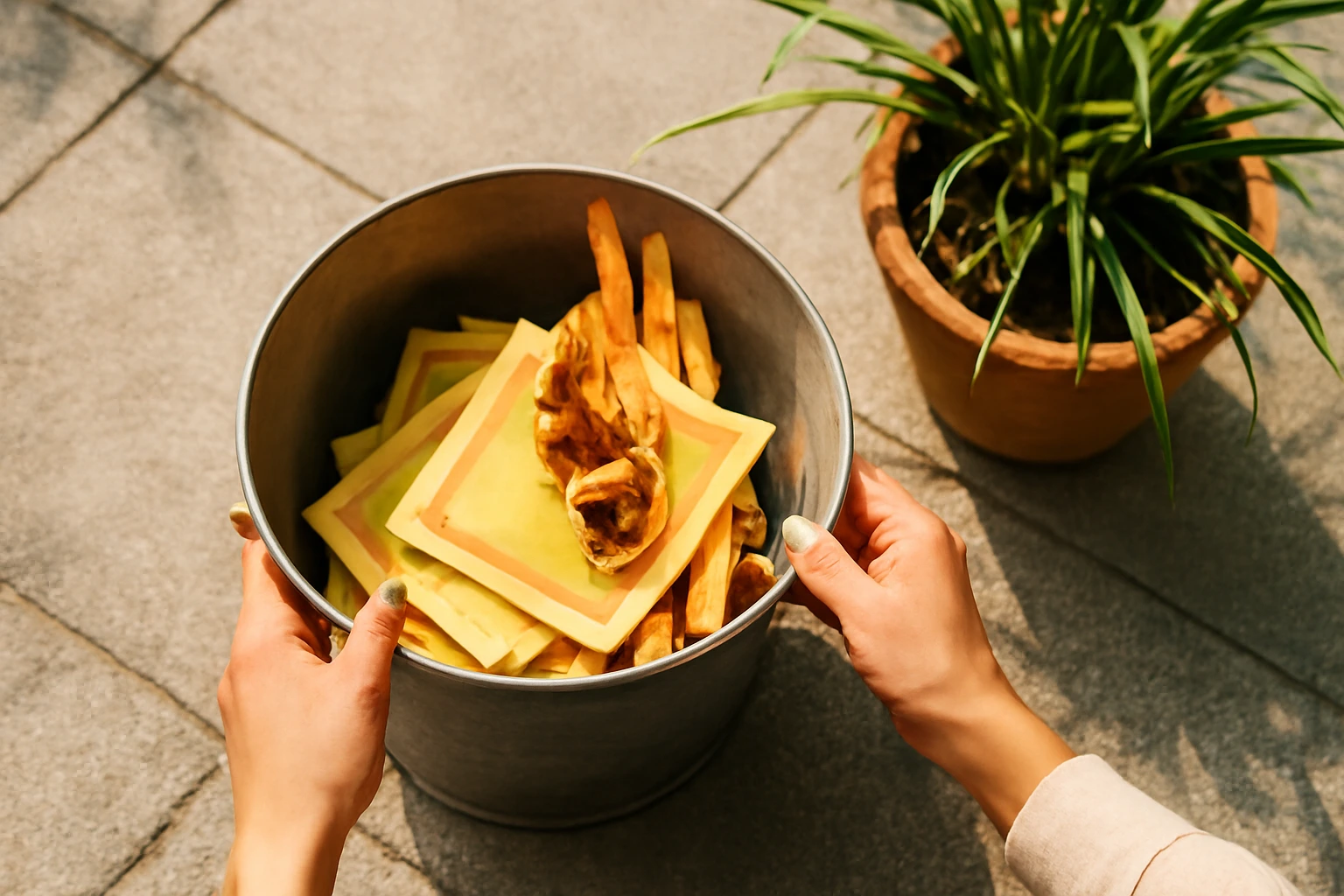
Many families burn vàng mã, paper money and paper goods meant for the ancestors, after a death anniversary, at Tết and during the seventh lunar month. The practice has declined in places, as pagodas and many families encourage cutting back on waste and smoke. If your family burns it:
- Use a metal bin or basin in a yard, pavement or open rooftop, away from anything flammable and from overhead wires.
- In an apartment building, burn only where the management allows; never on a balcony or in a corridor.
- Keep a bucket of water nearby and wait until the ash is completely cold before clearing it.
- Avoid burning on windy days, when embers drift onto neighbours' property.
When family members live far away
More and more Vietnamese families have members working in other cities or abroad. Those who cannot come home call, send an offering for relatives to place, or light a stick of incense at a small altar where they live. What counts in Vietnamese eyes is remembering the day and the sincerity behind it, not the size of the meal. If you live abroad with a Vietnamese partner, marking the date with a photo, a phone call and a small offering is a meaningful gesture.
Two full moons that matter more
Of the twelve full moons in a year, two stand out. The first full moon of the lunar year, Rằm tháng Giêng, is when pagodas are at their busiest; a Vietnamese saying holds that a year of worship does not equal this one day. The full moon of the seventh lunar month brings Vu Lan, the Buddhist festival of filial gratitude towards parents, and the custom of feeding wandering souls who have no family to remember them. That offering is usually set outside the front door or in the yard, separate from the ancestor altar, and you may see neighbours scattering puffed rice and small coins for passers-by to collect.
Families who want to switch to safer electric altar lamps can look at altar lamps at Vật Phẩm Phong Thủy, a Vietnamese-language shop delivering within Vietnam, and choose one with a stable base and tidy wiring.