Living with your Vietnamese neighbours' rituals: paper offerings, ghost month, funerals and weddings
Short answer: in Vietnamese cities, one household's rituals usually happen on the pavement or in the alley right outside another's door. Neighbours burn paper offerings on the first and fifteenth of the lunar month, set out food for wandering spirits during the seventh lunar month, and put up tents for funerals and weddings that can block half an alley for days. Living alongside this happily comes down to understanding what is going on, staying alert to fire and smoke, being patient during funerals and celebrations, and, if you need to raise a concern, doing it privately and in terms of safety rather than belief.
For many foreigners, these moments are among the most memorable parts of living in Vietnam. Here is what you are seeing and how to respond.
Paper offerings on the first and fifteenth
After making offerings at the family altar on mùng một and rằm, the first and fifteenth days of each lunar month, many households burn vàng mã: paper money, paper gold and sometimes paper clothes, phones or houses, meant to be sent to ancestors and spirits. The burning usually happens in a metal bin or basin on the pavement. In a narrow alley, smoke and ash drift into neighbouring homes.
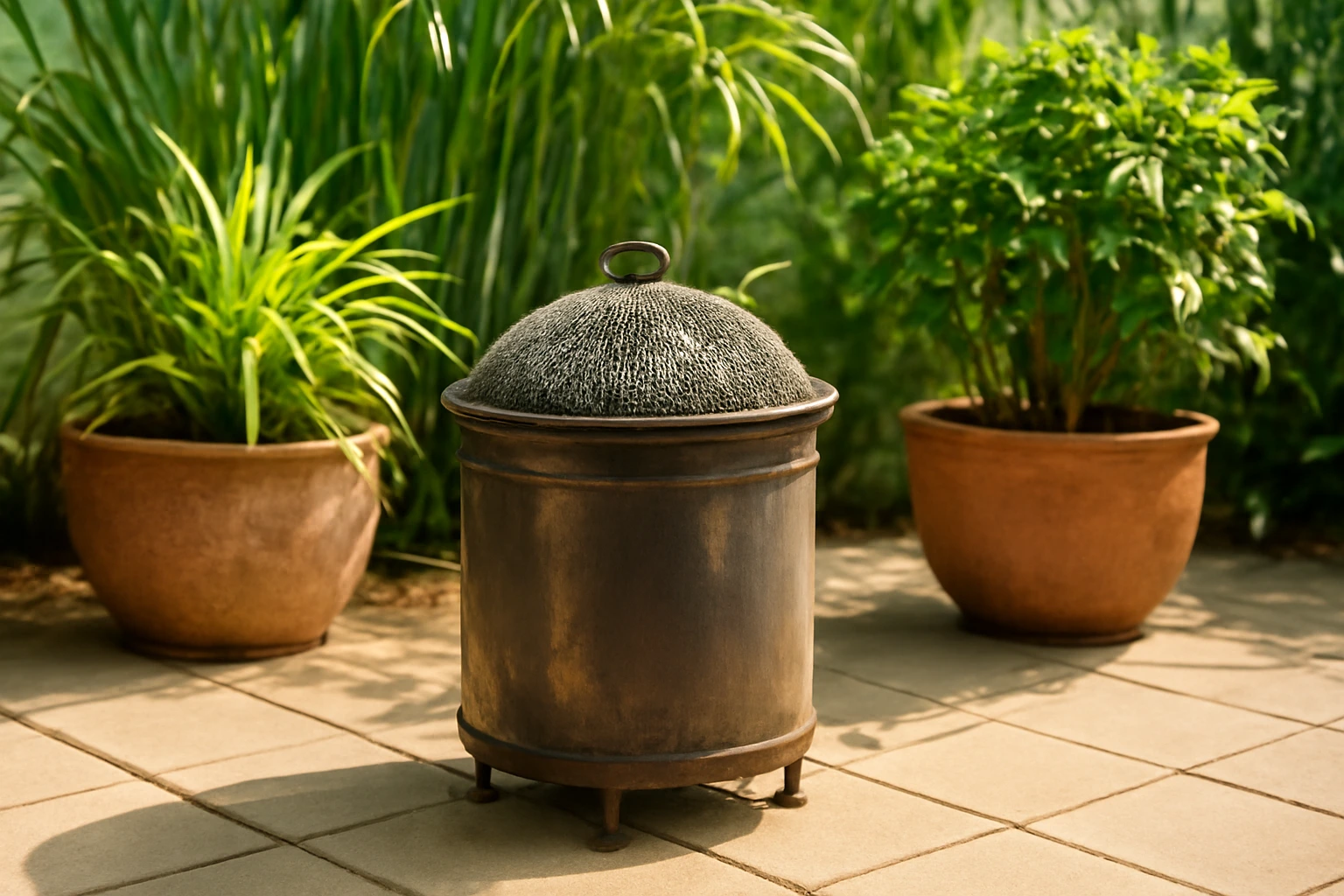
- Burning should happen in a metal bin with a mesh lid, on tiled or concrete ground, away from motorbikes, cables and canvas awnings.
- Someone should stay until the fire is completely out, since glowing ash can spread when the wind picks up.
- In apartment buildings, burning is generally only allowed in a designated area, never on balconies or in corridors.
If smoke regularly comes into your home, the approach most likely to be heard is to talk about safety and health: a child's cough, your motorbike parked close by, a flammable roof. A specific suggestion, such as moving the bin a few metres to a more open spot, works much better than objecting to the practice itself.
The seventh lunar month and the wandering souls
The seventh lunar month, usually falling around August, is popularly called tháng cô hồn, the month of wandering souls, roughly equivalent to the "ghost month" known elsewhere in East Asia. Families and shops set out trays in front of their doors with rice porridge, rice, salt, puffed rice, sweets and small banknotes, as charity for spirits who have no one to make offerings for them. In southern Vietnam there is a custom called giật cô hồn, "snatching from the ghosts", in which children and poorer neighbours rush to take the offerings once the prayers are over. Hosts are generally pleased when everything is taken. The fifteenth of the month is also Vu Lan, the Buddhist festival of filial gratitude, when many people visit pagodas.
During this month, many Vietnamese avoid moving house, opening businesses, buying vehicles and holding weddings. You do not have to share the belief, but it has real effects: a landlord may delay signing a new lease and tradespeople may postpone jobs. Plan around it.
If you witness giật cô hồn, keep an eye on the kerb. Children jostle and sometimes dash into the road; hosts sensibly put trays back from the street edge.
Funerals in the alley
In many neighbourhoods, funerals are held at home. A tent goes up outside the house, traditional funeral music plays, and visitors come and go for several days. The tent may take up part or all of the alley. During that time neighbours usually:
- Turn down music and television and avoid noisy gatherings.
- Ride slowly past the tent and avoid using the horn.
- Pay a visit if they know the family, wearing dark, modest clothing and bringing an envelope with a cash contribution.
- Offer parking space or plastic chairs if the family needs them.
If the tent blocks your way out, mention it quietly to a family member and they will make room. Everyone understands this. As a foreigner, a brief visit with a simple envelope, a bow before the altar and a few words of condolence is appreciated even if you knew the deceased only by sight.
Weddings, first-month parties and longevity celebrations
Weddings also bring tents and loudspeakers, sometimes into the evening. Families often let neighbours know in advance. If invited, attend and bring a gift envelope; if not, be patient with the noise for a day. Neighbourhood children are usually given sweets. You may also see smaller gatherings for a baby's first month, đầy tháng, or for an elder's longevity birthday, mừng thọ.
Shrines at the end of the alley
Many alleys have a small shrine, or a banyan tree with an incense bowl at its base, where the whole neighbourhood lights incense. Do not leave rubbish there, park against it or sit on the base, and remind children not to play with the incense bowl.
When your own household has an event
If you marry into a Vietnamese family or host a gathering at home, the roles reverse. Let the neighbours on both sides and at the alley entrance know in advance how long any tent will stay up and which way vehicles can still get through. Keep speakers at a reasonable volume and switch them off at a sensible hour. Tie the tent down well, since sudden gusts in the rainy season can bring canvas down. Temporary lighting and cables should be installed by someone who knows electrics, not strung loosely across the walkway. Afterwards, clean up the alley and take a small gift or a word of thanks to the households that put up with the disruption. Neighbours remember those gestures for a long time.
When beliefs differ
Not everyone on your street shares the same beliefs. Some neighbours are Catholic or Protestant, some follow no religion, some are foreigners like you. Living together does not require agreement, only respect: do not mock other people's rituals, and do not pressure anyone to take part. Simple curiosity, asking "what is the offering for today?", usually opens a friendly conversation rather than causing offence. Many Vietnamese neighbours enjoy explaining their customs to someone genuinely interested.
If you would like to keep a small, respectful altar of your own, the Vietnamese-language shop Vật Phẩm Phong Thuỷ, which delivers within Vietnam, has a section of Buddha figures and altar items; choose a size suited to a small home.