Moving house in Vietnam: the nhập trạch move-in ritual, the housewarming and the practical first day
Short answer: nhập trạch, literally "entering the house", is the Vietnamese move-in ritual. In its simplest form, the head of the household walks in first carrying a few symbolic items, typically the incense bowl from the family altar, rice, salt, water and a stove, then boils a kettle and makes tea, lights incense to inform the ancestors and local spirits, and opens the windows and turns on the lights. Alongside it come the practical tasks that make a new home safe: changing the locks, checking electrics and water, securing heavy furniture and registering the new address.
If you are moving in Vietnam with a Vietnamese partner, renting from a family that cares about these customs, or have been invited to a friend's tân gia (housewarming), this is what to expect.
What nhập trạch is for
For Vietnamese families, moving house is a new beginning that deserves to be marked. The ritual tells the ancestors the family has a new home and asks the spirits of the land for a peaceful stay. It is also simply a moment when everyone stops packing and carrying boxes and does something together.
There is no single national procedure. Some families prepare a full offering tray; others light a single stick of incense. What follows is a simple version suited to apartments and rentals.
Choosing the day
Many families consult the lunar calendar to choose an auspicious day, ngày hoàng đạo, and avoid inauspicious ones. Many also avoid the seventh lunar month, popularly known as ghost month, for moving. These are folk customs. Practical criteria matter too: when the moving truck is available, when older relatives are free, when there is no storm forecast, and when the building allows the lift to be used for furniture. Apartment buildings usually set moving hours and may require advance registration with management, so ask before the day or your truck may be stopped at the lobby.
If the auspicious day is inconvenient, many families do the ritual on that day with the symbolic items and move the furniture later.
What is carried in first
- The incense bowl, bát hương, if the family has an ancestor altar. It is carried carefully and placed on the altar before anything else.
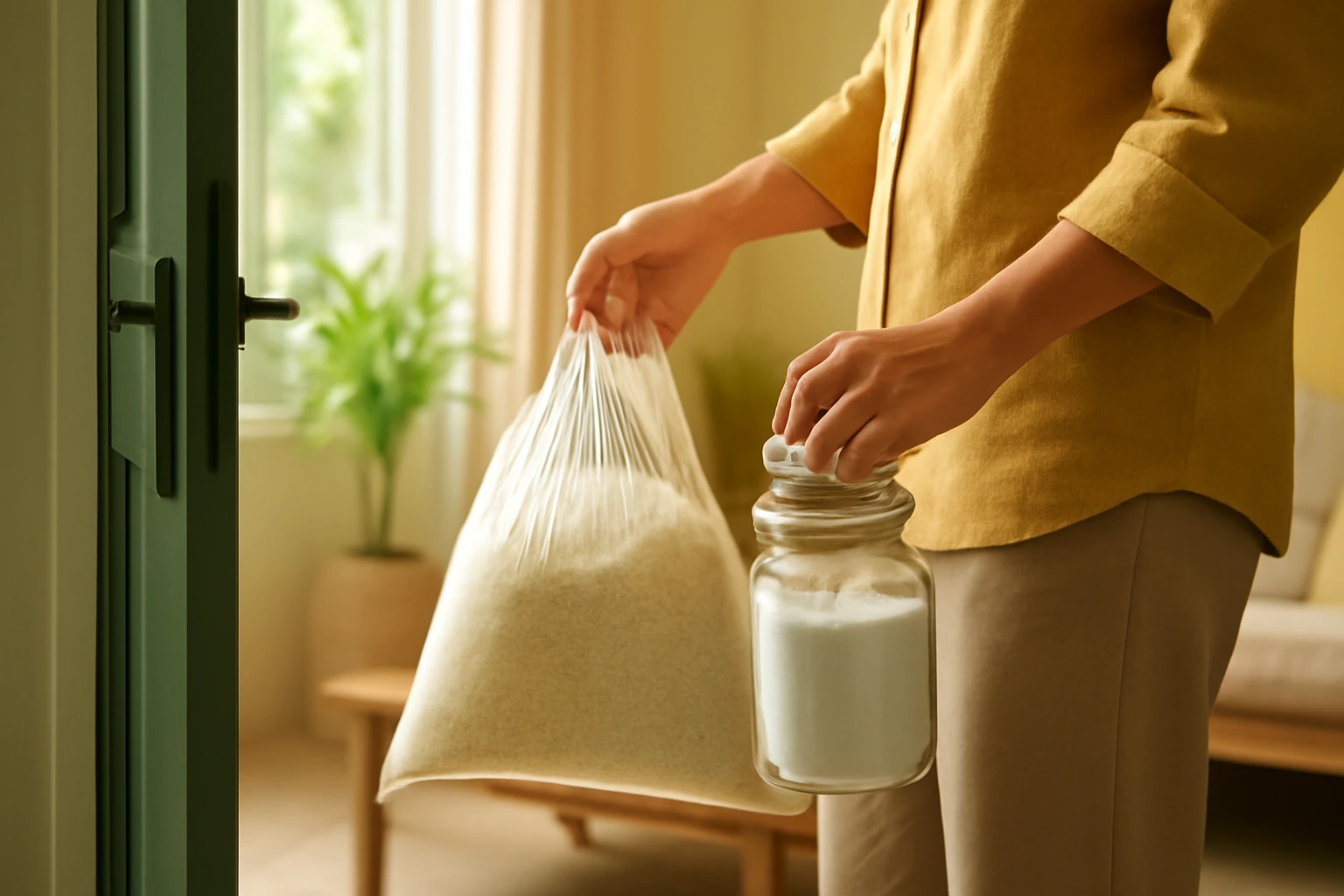
- Rice, salt and water: rice for having enough to eat, salt for lasting bonds, water for coolness and calm.
- A stove: in the past, live coals; today a camping gas stove or an electric kettle does the job.
- A new broom and everyday items, depending on the family.
Then a kettle is boiled and tea is made for everyone. This "opening of the kitchen" gives the house warmth, fire and life.
The offering
A simple tray might hold flowers, fruit, betel leaves and areca nut, incense, candles and a cup of water, with sticky rice and a boiled chicken in some families. The head of the household lights incense and announces the move. If the altar is not yet set up, the tray goes in the middle of the main room facing the front door.
In an apartment, watch the smoke alarm. Incense directly under a detector can set off the alarm for the whole building. Use only a few sticks, open the windows and keep the tray away from detectors. If paper offerings are burned, follow building rules, which usually allow it only in a designated area, never on balconies or in corridors.
How a foreigner can take part
If you are moving with a Vietnamese partner or their family, the most useful thing is to ask what they would like to do and follow their lead. You will not be expected to know the words of the prayer. Carrying in the rice or the water, helping set out the tray and standing quietly while incense is lit are all welcome. If you are the tenant and your landlord's family wants to perform the ritual before you move in, let them; it matters to them, and it costs you an hour.
The practical first day
- Change the locks, especially in a rental or a resale property; you have no idea how many keys exist.
- Test everything: every switch and tap, and find the main breaker and the main water valve.
- Secure heavy furniture: bolt tall wardrobes to the wall and put the television on a stable unit, particularly with small children.
- Fire safety: keep an extinguisher within reach and learn the building's escape routes.
- Childproof early: children explore a new home fast. Cover unused sockets and move knives and cleaning chemicals up high on day one.
Paperwork
Your new address must be registered for residence purposes. For foreigners this is usually a temporary residence declaration made by the landlord with the local police; confirm it has been done. Update your address with your bank, employer and utility and internet providers. None of this appears in feng shui books, but it is what makes life in a new home settled in practice.
Housewarming etiquette
After moving in, families often invite relatives and friends to a tân gia. It need not be big: a home-cooked meal is enough. If you are invited, small useful gifts are welcome, such as fruit, a plant, a set of cups or a small decorative piece for the home. Avoid giving knives or scissors, which some Vietnamese associate with cutting ties. If you are the one moving, a greeting and a small plate of cakes for neighbours on your floor during the first days goes a long way, especially after days of noise and a lift monopolised by your movers.
For a small piece to mark the move or to bring as a housewarming gift, the Vietnamese-language shop Vật Phẩm Phong Thuỷ, which ships within Vietnam, has a selection of feng shui figurines; choose something sized for the home.