Colour meanings in Vietnamese culture: red for joy, white for mourning, royal yellow and Huế purple
Short answer: many Vietnamese colour meanings come from ritual and everyday life rather than from the five-element chart. Red is the colour of weddings, Tết, lucky money and good fortune. White is the colour of mourning, yet also of the white áo dài worn by schoolgirls. Yellow was reserved for the emperor under the Nguyễn dynasty, and yellow and brown are the colours of Buddhist robes. Black appears in the ceremonial tunic and turban men wear for village rites. Purple is tied to the city of Huế. Knowing these layers helps you choose clothes, gifts and envelopes that fit the occasion.
For newcomers, colour is one of the easiest ways to get etiquette right or wrong without saying a word.
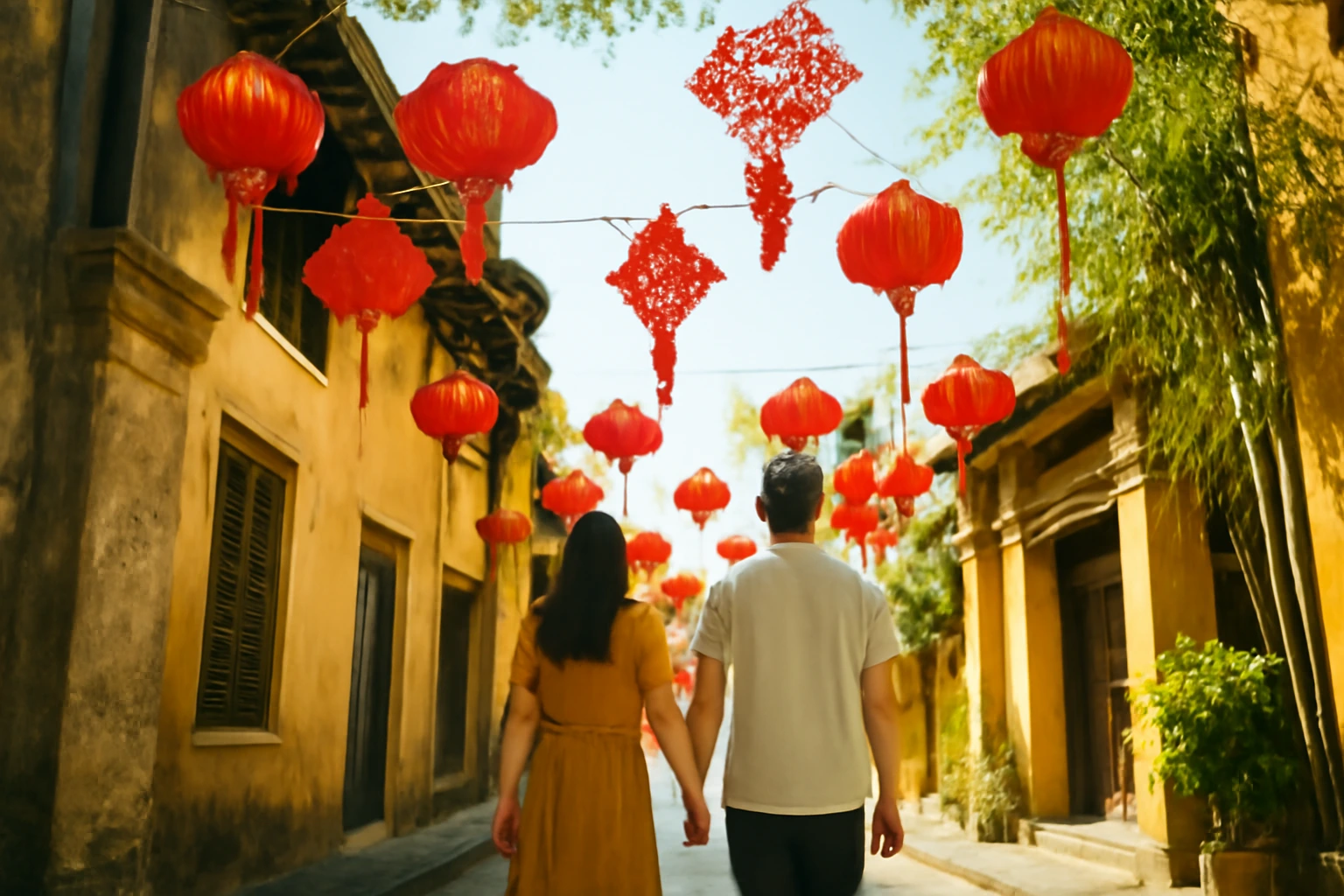
Red: the colour of happy occasions
Red is everywhere at Vietnamese celebrations: Tết couplets on doorways, lucky-money envelopes, wedding invitations, engagement trays draped in red cloth, the bride's áo dài. It stands for luck, warmth and vitality. In five-element terms red belongs to Fire, but Vietnamese people do not use red at weddings because of anyone's element; they use it because it is the shared colour of celebration.
The flip side is that bright red is the colour not to wear to a funeral. This is one of the clearest pieces of colour etiquette in the country.
White: mourning, and innocence
At a traditional Vietnamese funeral, the children and grandchildren of the deceased wear white headbands, white mourning clothes of coarse cloth, or a mourning armband. Here white is the colour of grief. Condolence envelopes are usually plain white, quite unlike the red envelopes of happy days.
At the same time, the white áo dài is the uniform of girls at many secondary schools, a symbol of youthful purity, and you will see it in every Vietnamese city. Both meanings coexist; context decides. Wearing white on an ordinary day carries no taboo, though many people avoid all-white outfits during the first three days of Tết.
Yellow: the palace and the pagoda
Under the Nguyễn emperors, yellow belonged to the throne: the imperial robes and the yellow glazed roof tiles on buildings inside the Huế Imperial City. Commoners could not use it freely. Today yellow is for everyone, but a sense of formality lingers.
Yellow and brown are also the colours of Buddhist monks' and nuns' robes. Yellow chrysanthemums are a standard altar flower, which is why many Vietnamese hesitate to give a bouquet of them as a birthday or shop-opening present. It is a common feeling rather than a strict rule; potted yellow chrysanthemums at Tết are very popular.
Black and brown: ceremony and labour
The black áo the, a long gauze tunic, with a wrapped turban called khăn xếp, is men's ceremonial dress for village temple rites, formal ancestor ceremonies and traditional weddings. Here black means solemnity, not mourning.
Brown homespun, áo nâu, was the everyday clothing of northern farmers, dyed with a local tuber, durable and forgiving of dirt. A similar earthy brown is worn by monks. Both suggest simplicity and are popular today in designs that want a traditional feel.
Huế purple and regional colours
"Huế purple" is a familiar image in Vietnamese poetry and song: the purple áo dài of schoolgirls in the old capital, evoking gentleness and quiet melancholy. There is no record of it ever being a rule; it is a cultural image repeated until it became a symbol.
Other regions have their own colours in the popular imagination, such as the pale, simple tones of the southern áo bà ba blouse, or the vivid brocades of the highland ethnic groups. Colour is also local memory.
Five colours at festivals
Five-coloured flags fly at communal temples during festival season, each colour standing for an element. The five-coloured sticky rice of the Tày, Thái and Nùng peoples is dyed with leaves and roots and eaten at festivals and Tết. Here the five elements appear as an idea of completeness and harmony, not as a chart for picking colours by birth year.
Choosing colours for clothes and gifts
| Occasion | Usual colours | Avoid |
|---|---|---|
| Wedding, engagement | Red, pink, bright yellow | All white, all black |
| Tết | Red, yellow, bright colours | All-white or all-black outfits |
| Funeral | White, black, dark muted tones | Red, bright colours, loud patterns |
| Death anniversary | Muted, modest colours | Very bright or revealing clothes |
| Pagoda visit | Muted colours, covered shoulders and knees | Shorts, sleeveless tops |
These are common habits, and families and regions vary. When unsure, muted and modest is always safe.
Colour, elements and personal taste
In daily life Vietnamese people can believe in lucky element colours, follow occasion colours and indulge personal taste all at once. The three layers rarely fight. A Water person still wears a red áo dài at her wedding; a Fire person still brings a white envelope to a funeral. Shared ritual comes before private taste and before any element chart, and visitors who follow that order will fit in easily.
Colour on the festive table
Colour also shows up on the plate. Bright red xôi gấc, sticky rice cooked with gac fruit, appears at weddings, Tết and a baby's one-month celebration, because red suggests good fortune. Square bánh chưng, sticky rice cakes wrapped in green dong leaves, are essential at a northern Tết and tied to the legend of Prince Lang Liêu. A tray of candied ginger, winter melon, coconut and lotus seeds, often in cheerful colours, sits on the table for guests. Here colour is about delight, not calculation, and accepting a piece when offered is part of the etiquette.
If you love purple and want a small amethyst for your desk or wrist, the amethyst section of Vật Phẩm Phong Thủy, a Vietnamese-language shop that delivers within Vietnam, is one place to look; choose it because it is beautiful, and check bead bracelets are strongly strung before giving one to a child.