Stairs, kitchen and toilet in a Vietnamese tube house: what custom forbids and what actually matters
Short answer: in a Vietnamese tube house the three places that collect the most rules are the stairs, the kitchen and the toilet. Custom dislikes stairs that run straight towards the front door and wants the step count to end on the word "life"; it keeps the stove from facing or sitting right beside the sink or fridge; and it avoids toilets in the centre of the house, under the stairs, or directly above the altar or kitchen. Behind almost every rule is a practical reason involving safety, ventilation or hygiene, and dealing with that reason usually reassures the people who believe in the rule as well.
If you rent a tube house, you will meet these rules in your landlord's choices. If you are building one with a Vietnamese family, you will meet them in every planning conversation.
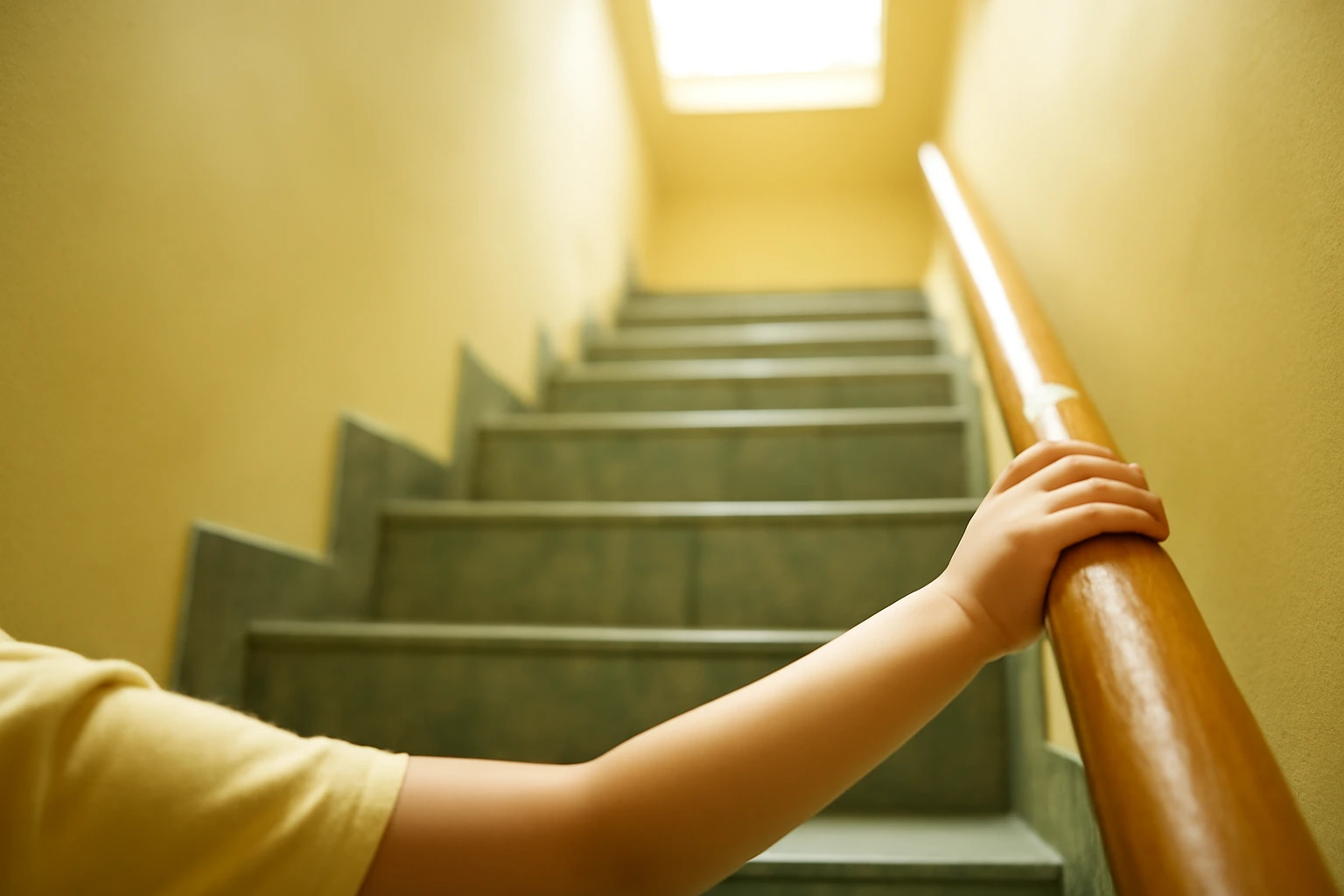
Stairs that point at the front door
Tube houses are narrow, so the staircase often sits just behind the living room, sometimes with its foot facing the door. Folk belief says energy entering the house will drift straight upstairs, or that money will "roll down" the stairs and out into the street.
The practical version: stairs right by the door are easy to bump into as you walk in, and a toddler running down can head straight into the road. Turning the bottom flight, adding a landing, or simply placing a low cabinet or large plant between door and stairs breaks the line. Re-routing stairs in a finished house is structural work for an engineer.
Counting steps: birth, age, sickness, death
Many Vietnamese builders count steps through a four-word cycle: sinh (birth), lão (old age), bệnh (sickness), tử (death). The first step is "birth", the second "old age", and so on. The aim is for the last step of a flight to land on "birth", meaning the total divided by four leaves one: 17, 21, 25 steps. Some regions use different words or count landings differently, so do not be surprised if two builders disagree.
This is pure folk belief. What matters far more is that every step has the same height and depth; a single step that is noticeably higher or lower than the rest is a classic cause of falls. A comfortable rise is roughly 15 to 18 cm. If the family wants the count changed, ask the architect to redistribute the whole flight evenly rather than tweaking one step.
Stair safety with children and older people
- A continuous handrail from bottom to top, with balusters close enough that a small child cannot put a head through.
- Light switches at both the top and bottom; the middle floors of a tube house are very dark at night.
- No pots, ornaments or heavy statues on the steps or on top of the railing.
- Steep stairs should have rails on both sides for older relatives.
The kitchen: fire against water, and where the gas goes
In five-element thinking the stove is Fire, while the sink and fridge are Water. Custom avoids placing the stove directly opposite or tight against the sink, a clash called thuỷ hoả xung, "water and fire in conflict". It also avoids a stove under a beam, a stove with no solid wall behind it, and a stove facing the front door.
The practical reasons are plain: water splashing into hot oil causes burns, the cook needs working space between stove and sink, and a stove near the door gets its gas flame blown out or sends smoke into the living room. A stretch of countertop for prep between the hob and the sink satisfies custom and good kitchen design at once.
Tube-house kitchens are usually at the back of the ground floor and run on bottled gas. Keep the cylinder upright in a ventilated spot, not in a closed cupboard, install a gas leak alarm, and close the valve when you leave. A range hood should vent outdoors or into the lightwell, not just filter and blow back into the room.
The toilet under the stairs
The space under the stairs is precious in a narrow house, and many owners put a toilet there. Custom dislikes it: the stairs are seen as the path energy takes upward, and placing something unclean beneath them is said to press bad energy into the heart of the house.
The practical issue is that an under-stair toilet usually has no window, so it traps smell and damp. If you have one, it needs an extractor fan ducted outside, a door that closes properly, and regular drying. Many families turn the space into storage or a shoe cupboard instead, which is also sensible.
Stacked bathrooms and the altar above the kitchen
In a multi-storey tube house, bathrooms on each floor are normally stacked vertically to share pipes. That is good engineering, but it means planning from the start so no toilet ends up directly above the kitchen or the ancestor altar. The usual layout puts the bathroom stack to one side, at the back or beside the lightwell, with the altar at the front of the top floor.
In a finished house where an upstairs toilet sits right above the kitchen, the real worry is waterproofing. A damp stain on the kitchen ceiling is a genuine hygiene problem for a plumber, not something to fix by hanging an object.
About "remedy" objects
You will hear advice to hang a gourd (hồ lô) at the toilet door, or put a plant or salt lamp near the stove to "balance" the elements. These are folk beliefs without evidence. A small gourd that makes the household feel better is harmless, but it does not replace an extractor fan, waterproofing or safe space around the stove.
If your family wants to keep that custom, the gourd section of Vật Phẩm Phong Thủy, a Vietnamese-language shop delivering within Vietnam, has small, light ones; hang it securely and not at head height over a walkway.
A sensible order of priorities
- Safety: stairs, railings, the gas cylinder, a second exit.
- Hygiene: bathroom ventilation, waterproofing, kitchen extraction.
- Convenience: prep space, under-stair storage.
- Family custom: stove direction, step count, altar position as the elders prefer.
Work through it in that order and most of the folk concerns will have been dealt with along the way, at no extra cost.