Opening a shop in Vietnam: grand-opening rituals and the first-customer custom of mở hàng
Short answer: a khai trương, a shop's grand opening, usually involves picking a date from the lunar calendar, making an offering at the shop altar and inviting friends and relatives to buy something as the very first customers. A separate, everyday custom called mở hàng, "opening the sales", gives special weight to the first customer each morning: many sellers believe that a smooth first sale sets the tone for the whole day. Both customs are part of the charm of trading in Vietnam, but both can turn into pressure if taken too far.
This article is for foreigners who are starting a business in Vietnam, working with Vietnamese partners, or who have simply been met with a frown at a morning market and wondered why.
What a Vietnamese shop opening involves
A typical opening for a small business includes some or all of the following:
- Choosing the date and hour. Many owners consult the lunar calendar, or someone who reads it, to avoid days considered unlucky and to pick an "auspicious" one, called ngày hoàng đạo.
- Setting up the shop altar to Ông Địa, the earth god, and Thần Tài, the god of wealth, usually on the floor facing the door.
- The opening offering. A tray with fruit, sticky rice, boiled chicken or roast pork depending on budget, incense, and betel leaves with areca nut.
- Inviting people to "open the sales", with friends and family buying something symbolic, and colleagues sending tall congratulatory flower stands that line the pavement.
Choosing a date is a folk practice drawn from old calendar systems. There is no way to test whether a shop opened on an auspicious day does better than one opened on an ordinary day. A date when your stock has arrived, the weather is dry and the people you care about can attend is, however, a good date in every practical sense.
The practical checklist that rituals can crowd out
It is easy to put all the energy into the ceremony and overlook the basics. Before opening the doors, check:
- Business registration, the lease and any local permits are complete. This is a question for the relevant authorities or a legal adviser, not for a feng shui consultant.
- The electrical supply can handle air conditioning, refrigerators and the illuminated sign.
- A fire extinguisher is mounted somewhere visible and staff know how to use it.
- Prices are clearly displayed and you have plenty of small notes for change.
Safety on a busy day
Opening day means crowds, many flower stands, plenty of incense and, sometimes, the burning of vàng mã, paper offerings. Keep flower stands from blocking the pavement and your own exit. Firecrackers are banned by law in Vietnam; confetti cannons powered by compressed air are the common substitute, and they should never be pointed at faces or overhead cables. If paper offerings are burned, do it outdoors in a metal bin, well away from the flower stands, which catch fire easily, and keep someone watching until the ashes are cold.
Mở hàng: why the first customer matters so much
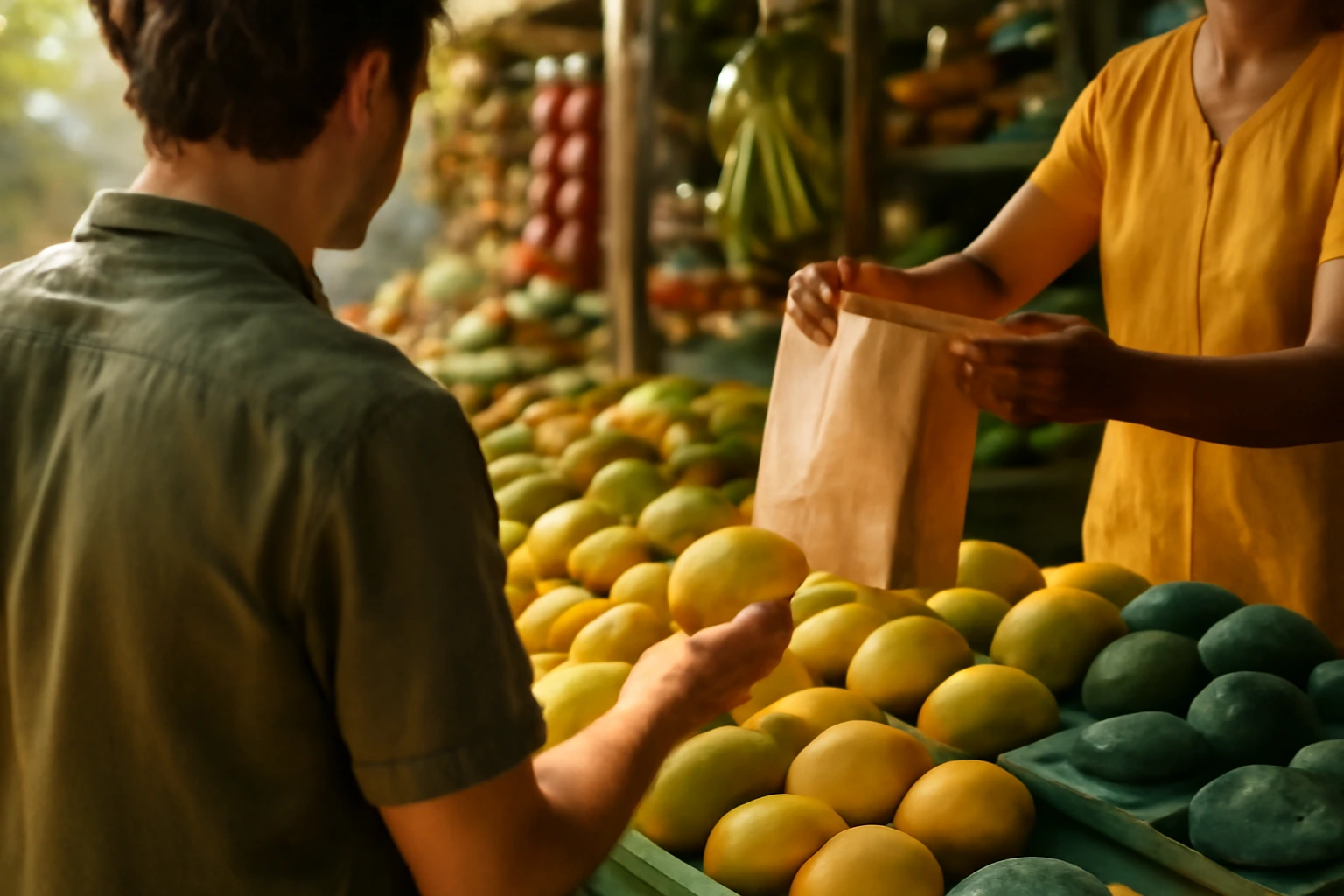
For many traders, especially in markets, the first customer of the day is special. If that customer buys quickly and cheerfully, the belief goes, the day will go well. If they ask the price, haggle hard and walk away, the day is "spoiled". After receiving the first note of the day, some sellers lightly brush it across their goods, a gesture sometimes called vuốt lộc, "stroking in the luck".
The psychology is easy to understand. Morning is when a small trader feels most anxious about the day ahead, and an easy first sale is reassuring. There is, however, nothing to suggest that one customer determines the day's takings.
What this means if you are the customer
As a foreigner, you may run into this custom without knowing it. If you are the first person at a market stall in the morning and you ask about several items, bargain at length and leave without buying, the seller may be noticeably annoyed. In rare cases you may hear a sharp comment or see salt sprinkled at the doorstep after you leave, meant to cleanse the bad start.
None of this obliges you to buy. Asking a price and declining is perfectly normal. Knowing the custom simply helps you avoid taking it personally, and, if you are fairly sure you will buy, it is a kind gesture to make the first purchase early and without much haggling.
What this means if you are the seller
If you run a business in Vietnam, your Vietnamese staff may hold these beliefs strongly. Respect that, but there is a line between custom and bad service. Pressuring a customer to "open the sales for me", or treating someone badly because they did not buy, loses real customers to avoid an imaginary bad day. A pleasant experience is remembered far longer.
Taboos worth keeping and taboos worth dropping
| Taboo | Suggestion |
|---|---|
| Not sweeping dirt out through the front door on opening day, so as not to "sweep the luck away" | Harmless; sweep inwards and pick up the dust |
| Not lending money or selling on credit on the first day of the month | Can be kept as a sensible cash habit |
| Scolding a first customer who does not buy | Drop it; it costs real customers |
| Not letting a particular person make the first sale because they are thought to bring bad luck | Drop it; this is prejudice with no basis |
Gifts for an opening
If a Vietnamese friend or partner invites you to their opening, a flower stand or a small decorative piece for the shop is the usual gift. Think about their space: a tiny counter calls for a tiny object, and a food business does not need something bulky that collects grease. Avoid anything so large that the owner has to worry about where to put it.
For a small traditional token, the Vietnamese-language shop Vật Phẩm Phong Thuỷ, which delivers within Vietnam, has a selection of feng shui figurines; something modest and easy to dust is the most practical choice.