Kitchen Gods' Day and the big clean before Tết: what Vietnamese families do, in what order
Short answer: on the 23rd day of the twelfth lunar month, Vietnamese families make offerings to see off the Kitchen Gods, ông Công ông Táo, three household deities believed to fly to heaven to report on the family's year. After that, Tết preparation begins in earnest: a thorough house clean, a careful cleaning of the ancestor altar called bao sái, trimming old incense stubs from the incense bowl, then shopping and decorating. Many families release live carp after the ceremony; the considerate way is into a clean pond or lake, taking the plastic bag home, never throwing fish from a bridge. During the big clean, the most common accidents are falls from chairs and toxic fumes from mixing cleaning products.
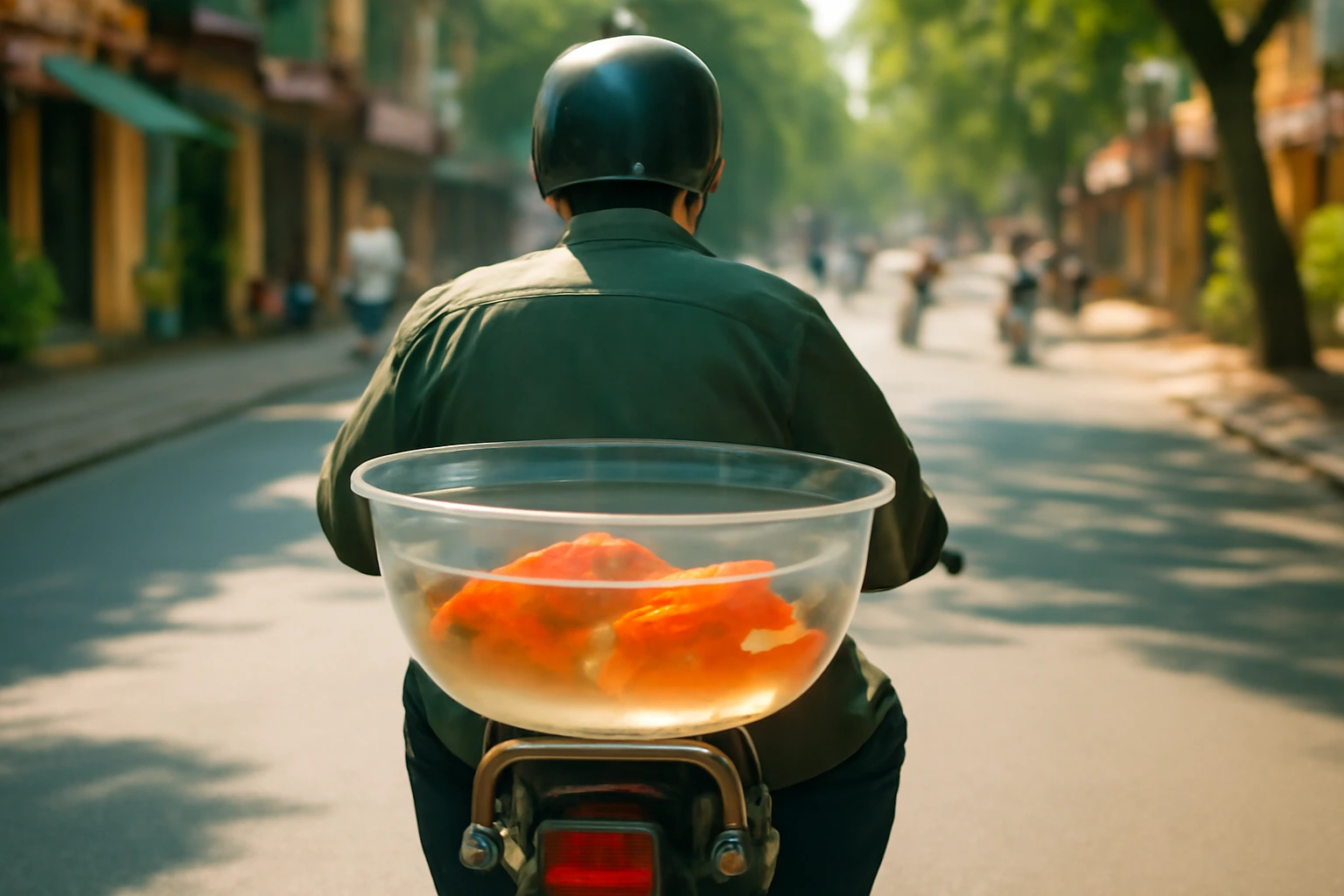
If you live in Vietnam, this is the week when you will see people on motorbikes carrying basins of live fish, paper hats on sale at every market, and neighbours dragging furniture onto the pavement to scrub floors.
Who the Kitchen Gods are
In Vietnamese folk belief the Kitchen Gods are two men and one woman who watch over the hearth and the household. The best-known legend tells of a woman, her first husband and her second husband, who all died in a fire and were made gods of the kitchen by the Jade Emperor. Each year on the 23rd of the last lunar month they ride carp up to heaven to report, and return on New Year's Eve.
Kitchen-god worship exists across the Chinese-influenced world, but the Vietnamese version, with its trio and its carp that turn into dragons as they rise, is distinctly local. Carp are chosen because of the old story of the carp that leaps the falls and becomes a dragon.
What the offering looks like
The ceremony usually takes place before noon on the 23rd, though some families do it on the 22nd. Offerings vary, but often include:
- A set of paper hats and robes for the gods: two men's hats, one woman's, with paper boots.
- Live carp in a basin of water, or paper carp where releasing real fish is impractical.
- A meal, either savoury or vegetarian, with fruit, incense, betel and rice wine.
Afterwards the paper clothes are burned with votive paper. Use a metal bin in an open space, away from tarpaulins, tin roofs with dry leaves and overhead cables. The northern winter is dry, and paper fires spread fast.
Releasing the carp responsibly
The carp carry the gods to heaven, and releasing them is also seen as an act of merit, a way of sparing life. In recent years, lakes full of floating plastic bags and fish hurled from bridges have prompted city authorities and environmental groups to remind people of better ways:
- Release into a nearby pond, lake or river with clean water where carp can live.
- Lower the basin close to the surface and tilt it so the fish swim out.
- Take the bag, basin or box home; do not let it go into the water.
- Do not climb on bridge railings or slippery embankments to throw fish. People falling in on this day is not unheard of.
Some cities have staffed collection points for released fish; handing them over there is a perfectly respectable option.
Cleaning the altar: bao sái
Bao sái is the end-of-year cleaning of the ancestor altar, usually after Kitchen Gods' Day and before New Year's Eve. Some families pick an auspicious date; others choose whichever day everyone is home. A common sequence:
- Light one stick of incense and ask the ancestors' permission to clean.
- Wipe portraits, lamps, vases and stands with clean cloths. Brass items may be polished.
- Many families use warm water infused with ginger and rice wine, or with pomelo leaves, for a fresh scent.
- Wipe only the outside of the incense bowl. Do not turn it or lift it to another place.
Leave this to the elders or let them guide you, especially around the incense bowl. If you are the foreign member of the household, offering to help with the heavy furniture and leaving the altar to them is usually the right balance.
Trimming the incense stubs
After a year, the incense bowl bristles with burnt stubs. Trimming them, tỉa chân hương, means pulling most of them out and leaving an odd number, three, five or seven depending on family custom. The removed stubs are burned, and the ash is put into clean water or buried at the foot of a tree, not thrown in the household rubbish.
Steady the bowl with one hand while pulling so it does not shift. Dry stubs snap and can spike a finger, so go slowly.
The big clean: two accidents to avoid
Cleaning before Tết follows the idea of sweeping out the old year to welcome the new one. It is also a peak time for household accidents.
- Falls. Ceiling fans, light fittings, hanging altars and upper windows all get cleaned now. Use a proper A-frame ladder with locks engaged and someone holding it, never a plastic chair or a swivel stool. Let younger people handle high work.
- Mixing chemicals. Chlorine bleach mixed with acidic cleaners or ammonia can release toxic gas. Use one product at a time, rinse thoroughly before switching, and keep windows open.
With small children around, the bottles left on the floor mid-clean are the easiest things for them to reach.
A rough timetable, 23rd to 30th
| Lunar date | Typical tasks |
|---|---|
| 23rd | Kitchen Gods' offering, carp release |
| 24th to 27th | House cleaning, washing curtains, small repairs, altar cleaning |
| 27th to 29th | Buying flowers and trees, arranging the five-fruit tray, wrapping rice cakes |
| 30th (or 29th in a short month) | Year-end offering and the New Year's Eve ceremony |
In years when the last lunar month has only 29 days there is no 30th, and Tết arrives a day "early". Shops, offices and markets close progressively over this week, so do your own errands early.
Families who like to keep a pair of brass or ceramic carp on display all year, rather than live fish for one morning, can browse carp figures at Vật Phẩm Phong Thủy, a Vietnamese-language shop that delivers within Vietnam; a decorative carp does not replace the release for families who keep that custom.